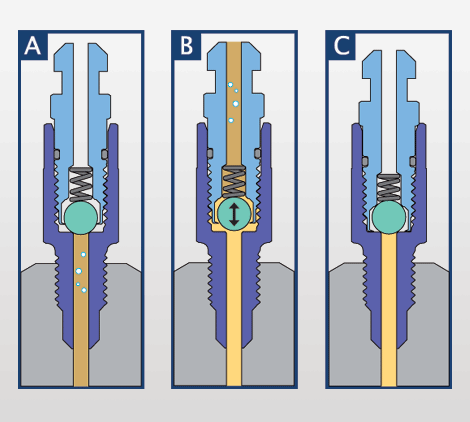
I’ve always struggled with bleeding brakes. it doesn’t help that most gear you can buy is sized for cars and only sizes down to smaller bike brakes with awkward adapters which are prone to leak air. I noticed these Stahlbus brake bleeders which replace the existing brake nipples, and incorporate a one-way valve into the nipple itself. no matter if your pipe slips off the nipple, air won’t go back into the brake system.
Parts
- 2x M10 single banjo bolt bleeder (for the front calipers)
- 1x M8 bleed nipple (for the rear caliper)
- 3x bleed nipple cover (gutsibits sells seperately, some other sites include them)
- optionally i believe you can fit a stahlbus bleeder at the front caliper but i didn’t do this and don’t know the part size
Procedure
- in either case, undo the existing bolt from the caliper, and replace with the new stahblus equivalent
- for the rear caliper, there is no copper crush washer. it seats into the caliper directly and a tapered surface at the bottom provides the seal
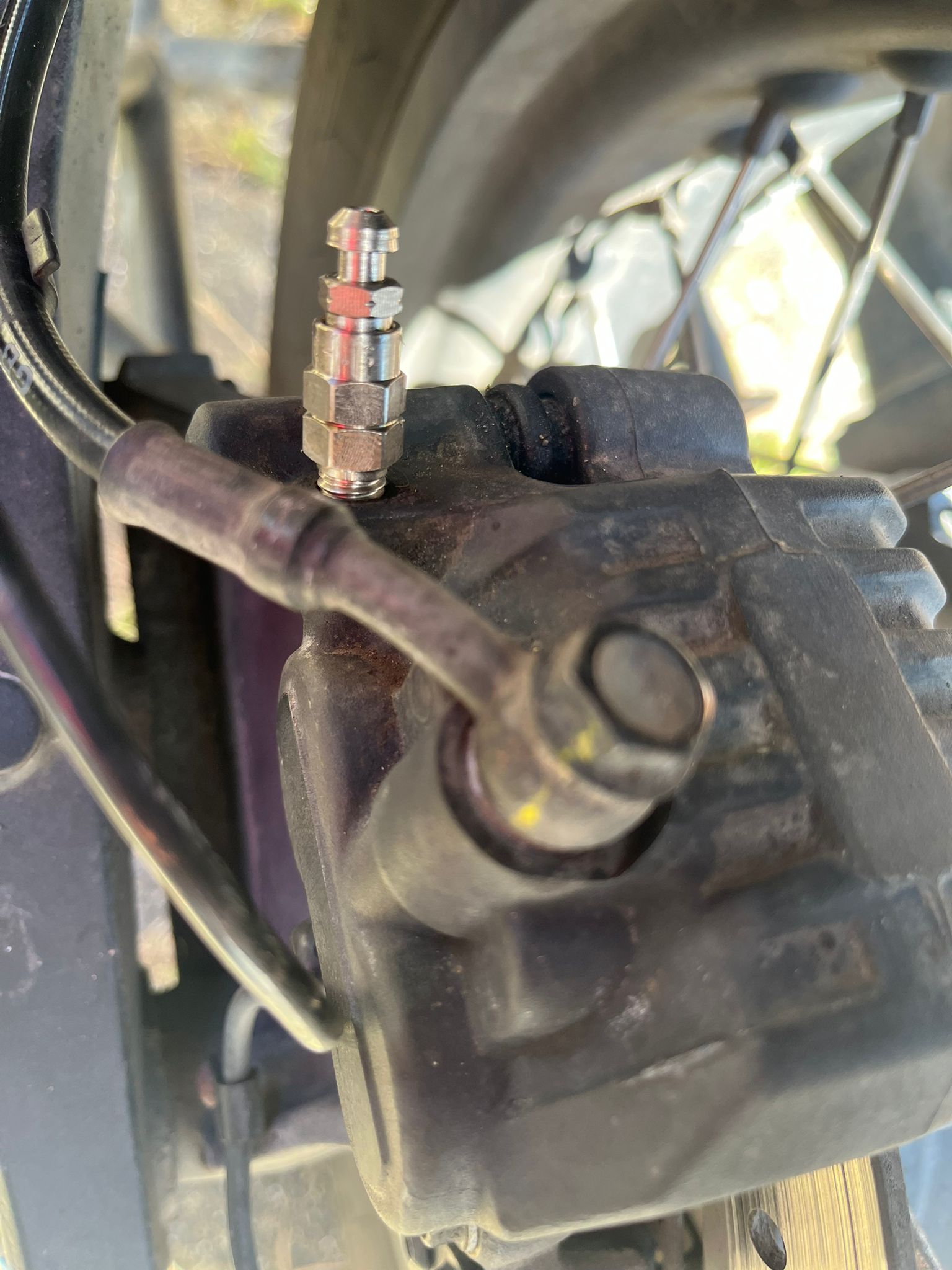
- for the front caliper, stahlbus provides 2 new copper crush washers. you MUST use the new ones, both of them. using an old copper crush washer may work fine until one day hydraulic pressure can find a fault in the copper and use it to bleed out, at which point your brakes will fail and you will die.
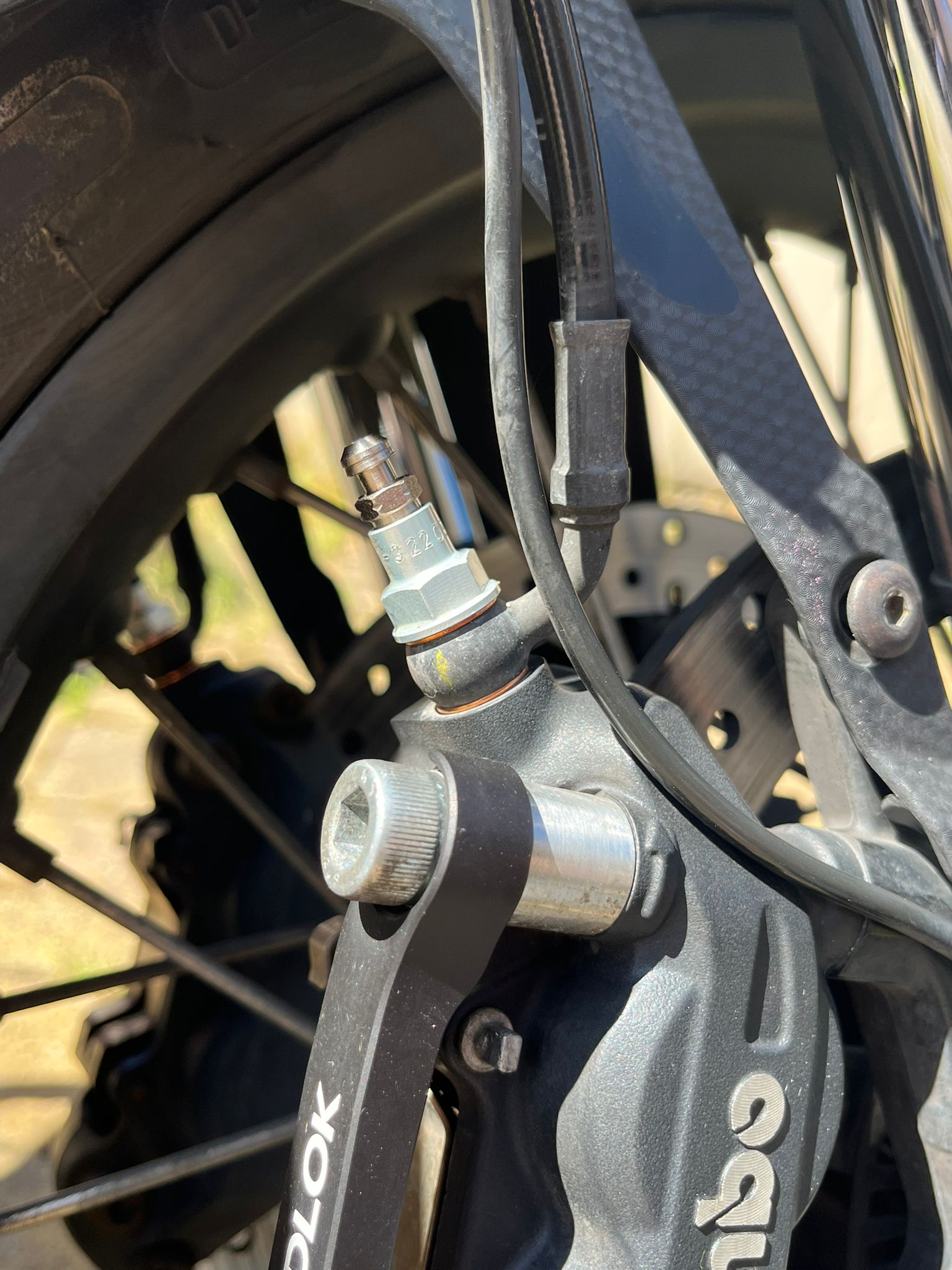
- the back doesn’t tend to weep much once you remove the bleeder, but the fronts do, so maybe prepare a ziplock bag to put the caliper in whilst you’re working on it so the fluid doesn’t go anywhere.
- never use any kind of sealant tape or gel on the threads of a brake connector. other than the copper crush washer, no other sealant is needed. if it leaks, and a new crush washer doesn’t fix the leak, you have a bigger problem.
- in order to bleed the brakes, loosen one of the bleed nipples (the smaller hex bolt on top, not the larger one below) around 1/2 turn, and attach a rubber tube into a drain bottle
- open the brake reservoir, on the front, this is 3x philips head screws. on the rear, you remove the single allen key and the whole thing seperates from the bike.
- flatten the rubber gasket inside the reservoir lid
- pump the brake (if you’re bleeding, a few times is ok, for flushing, you want to do this until you see newer fluid, it took me around 15 pumps)
- whilst pumping the brake, ensure the level of fluid in the reservoir doesn’t fall below the minimum, else you’ll draw air into the system
- when done, replace the reservoir cap and secure as you found it, then tighten the stahlbus bleeder nipple snugly and add its cap.
- make sure to test your brakes on a driveway or small road at low speeds.
notes
I regularly ziptie my front brake fully down when i know i’m not going to be on the bike for a few days. it acts as a cheap and easy bleed, all the little air bubbles in suspension have days to travel upwards through the system to the reservoir. you can do the same by ziptieing a dumbbell or stone block to your rear brake lever.
Never use any fluid on a brake system not specifically designed for brakes. specifically, anything petroleum based will break down brake fluid and ruin it.
DOT4 brake fluid can be removed by washing with water. if you get brake fluid anywhere on the bike, it’s important to thoroughly hose it down straight after you finish working on it, or it will eat through paint. I gave my bike a pressure wash immediately after fitting the stahlbus bleeders, then again a couple hours later.